Remember when we talked about loss functions being like a strict teacher with a red pen? Well, now we need to figure out what the student does with all that feedback. That’s where gradient descent comes in—it’s the study plan that turns harsh criticism into actual improvement. by Christopher Miller
After PHP Tek 2026 wrapped, a group of us walked into a slightly shady restaurant (some of us wearing hot dog hats) and were all tired but excited. The counter staff looked up, saw us pile through the door, and one of them just said, “Whoa.” We were the only customers. Someone’s two-year-old kid was there, completely stealing the show, charming everyone. It was loud and joyful and completely absurd. It was WurstCon. by Scott Keck-Warren
I was reviewing a codebase a few weeks back when I hit a line that stopped me cold… by Eric Mann
In Part VI, we looked at database topology – primaries, replicas, stable writer endpoints, and the failover models PHP teams can actually operate. That gives us the infrastructure story, but it still leaves one uncomfortable question – what does the user see when the system is technically up, yet the data path is under stress? by Wendell Adriel
APIs change. Business requirements shift, data models evolve, and the design decisions that seemed reasonable in v1 turn out to be limitations by v2. The question is not whether your API will need to change, but how you handle that change without breaking the consumers who depend on it. by Steve McDougall
AI, by design, compares your input to what already exists within its training data. However, when very little precedent exists (in the training data) for comparison, that absence triggers the error-recovery mode we have been observing. This month’s objective is simple and direct – shift the AI’s thinking mode into the correct channel. by Edward Barnard
I want to start with a feeling rather than a definition, because I think the feeling is what actually drives most of us to care about design in the first place. by Steve McDougall
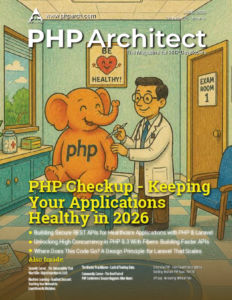
Healthcare applications handle some of the most sensitive data in any industry – patient records, medical histories, diagnoses, prescriptions, appointments, and personal health information. A security breach in healthcare isn’t just a technical problem; it’s a legal exposure, a clinical risk, and an ethical failure that can compromise patient safety and violate regulations like HIPAA, GDPR, and NDPR. by Henry Messiah





Leave a comment
Use the form below to leave a comment: